
December 2009
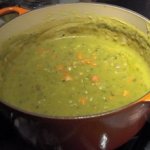
Split Pea Soup
Homemade split pea soup is hard to beat. This hearty split pea soup is great way to warm up on a cold winter day.
- Login or register to post comments
- Read the rest of Split Pea Soup.
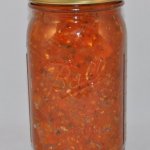
Bolognese Sauce
Bolognese Sauce is a classic Italian meat sauce, rich and full of flavor. This bolognese recipe is brimming with plenty of meat and vegetables, very satisfying.
- Login or register to post comments
- Read the rest of Bolognese Sauce.
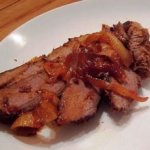
Jewish Holiday Brisket
This brisket is one of the memorable dishes we enjoy for the Jewish holiday meals, perfect for Passover, Rosh Hashanah and Chanukah.
- Login or register to post comments
- Read the rest of Jewish Holiday Brisket.
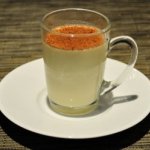
Holiday Eggnog
Enjoy this traditional eggnog recipe. Nothing bashful or low calorie about eggnog. Not to worry, nobody counts calories during the holidays.
- Login or register to post comments
- Read the rest of Holiday Eggnog.
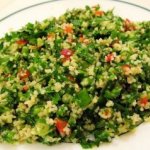
Tabouleh
Tabouleh is a delicious Mediteranean chopped salad made with cracked bulghur wheat, mint, parsley, tomatoes and onions. Tabouleh is very healthful. Also spelled Tabouli or Tabule.
- Login or register to post comments
- Read the rest of Tabouleh.
Chile Pepper Heat Rating - The Scoville Scale
Chile peppers add a special flavorful dimension to cooking. Not only just the heat and spice, but a variety of flavor sensation too!
When you visit the grocery market today, you'll find more variety of chile peppers than ever. Some peppers are more on the mild side and other chili peppers pack enough wallop of heat, they can take your breath away.
There's actually an somewhat standard and commonly used method to rate the heat level of chili peppers. Although you may not see these ratings on display at the supermarket, "Scoville Units" are a useful way to classify the various levels of heat from one variety of chile pepper to another.
The Scoville method was developed almost 100 years ago by Wilbur Scoville, a pharmacist, in 1912. Originally, the method employed human tasters to determine by how much an extract of a pepper's pungency would have to be diluted by sweetened water to neutralize the sensation of heat from the chile peppers on the tongue.
Today, a more modern process is used called "High Performance Liquid Chromotography" (or HPLC) which measures the amount of capsaicinoids (capsaicin) in parts per million. Capsaicin is the compound found in chiles that is responsible for the heat.
- editor's blog
- Login or register to post comments
- Read the rest of Chile Pepper Heat Rating - The Scoville Scale.
Sodium Content in Foods
For many people, excess sodium in the diet can contribute to high blood pressure and other adverse health effects. The daily recommended sodium intake falls between 1500 mg and 3000 mg, depending on how many calories you consume (about 1,000 mg of sodium per 1,000 calories).
Interestingly, according to the Mayo Clinic, only about 11 percent of the sodium in the average US diet comes from adding salt to the food. The majority of sodium, over 77 percent, comes from eating prepared or processed foods that contain salt. Unfortunately, fast foods are some of the worse offenders when it comes to high salt content (just add salt and you can cover up just about anything).
And even the sodium levels present in the public water supply can vary significantly from one area to the next. Yes, salt intake from just the water we drink. The New York city public water supply has one of lowest sodium levels of sodium in the country and Galveston, Texas has one of the higher levels of sodium (from the public records, not an exhaustive and conclusive study).
Here is a list of common food items with their associated sodium content. Some of the sodium levels in our everyday food may surprise you. For example, canned peas have over 100 times the sodium of raw peas.
- editor's blog
- Login or register to post comments
- Read the rest of Sodium Content in Foods.
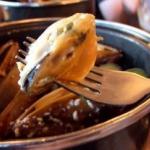
Garlic Mussels
Garlic mussels in a white wine broth with freshly grated Parmesan cheese. Makes an ideal starter course, with a crusty sour dough bread to scoop up the broth of course.
- Login or register to post comments
- Read the rest of Garlic Mussels.
Soup to Nuts - musing about food expressions
Soup to Nuts - now how did that saying get started?
We hear the common colloquialisms, expressions and idioms everyday, and usually just take the words for granted. We're almost numb to their meaning. Do you ever stop to listen to the words, and wonder "where did that expression come from"?
I had that pause the other day when someone mentioned "soup to nuts" in the context of what we were talking about (and I honestly can't even remember what we we're talking about). OK, we know that soup to nuts means everything from A to Z, or maybe more accurately, everything from start to finish.
But just how did the phrase "soup to nuts" come about? In the spirit of the general food interest here at Family Recipe Central, I thought I would "spill the beans" (another shameless food related saying) and dig up the derivation of the expression "soup to nuts".
- recipebob's blog
- Login or register to post comments
- Read the rest of Soup to Nuts - musing about food expressions.
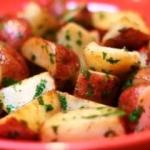
Lemon Parsley Red Potatoes
Lemon Red Potatoes with parsley is an easy way to spruce up a side helping of red potatoes. Always looking for more ways to use those lemons from the lemon tree in the back yard.
- Login or register to post comments
- Read the rest of Lemon Parsley Red Potatoes.
